Showing posts with label 1800's. Show all posts

Monday, March 30, 2015

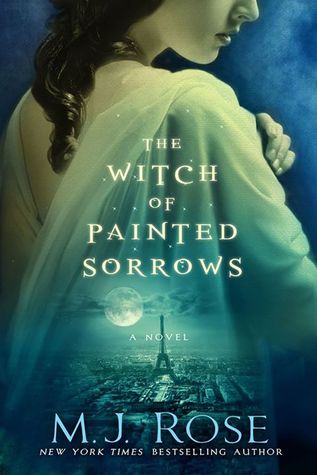
Review: The Witch of Painted Sorrows

The Witch of Painted Sorrows (The Daughters of La Lune #1)

Title: The Witch of Painted Sorrows
Author: M.J. Rose
Publisher: Atria Books
Published: March 17, 2015
Series: Daughters of La Lune #1
Format: Kindle ARC
Pages: 384
Date Read: February 24, 2015
Source: Received from the publisher via Netgalley 
in exchange for an honest review
Add To Your TBR list on Goodreads

My Rating: 2 Stars

Synopsis:
 Possession. Power. Passion. New York Times bestselling novelist M. J. Rose creates her most provocative and magical spellbinder yet in this gothic novel set against the lavish spectacle of 1890s Belle Époque Paris.

Sandrine Salome flees New York for her grandmother’s Paris mansion to escape her dangerous husband, but what she finds there is even more menacing. The house, famous for its lavish art collection and elegant salons, is mysteriously closed up. Although her grandmother insists it’s dangerous for Sandrine to visit, she defies her and meets Julien Duplessi, a mesmerizing young architect. Together they explore the hidden night world of Paris, the forbidden occult underground and Sandrine’s deepest desires.

Among the bohemians and the demi-monde, Sandrine discovers her erotic nature as a lover and painter. Then darker influences threaten—her cold and cruel husband is tracking her down and something sinister is taking hold, changing Sandrine, altering her. She’s become possessed by La Lune: A witch, a legend, and a sixteenth-century courtesan, who opens up her life to a darkness that may become a gift or a curse.

This is Sandrine’s “wild night of the soul,” her odyssey in the magnificent city of Paris, of art, love, and witchery.

Melissa's Musings:
When I first got approved for The Witch of Painted Sorrows, I was thrilled. Both because it was my first time ever requesting a book from Netgalley, and being approved, and because the premise of this book seemed so interesting.

I'm sad to say my interest in the synopsis was misguided.

As a main character, Sandrine didn't really do much for me. I wasn't all that interested in her. She just didn't feel fleshed out enough. Of what we learn about Sandrine, most of her personality is clouded over by the secrets of the life that she's running from, and then further complicated by the family history that she's run into by coming to Paris.

I was more intrigued by her grandmother. She too, was a frustrating character, in the sense that she only hints at things that Sandrine needs to know, but doesn't come right out and say them. Sadly, she her role is quite diminshed as the story progresses.

The most frustrating part of reading this book is that every time it seemed like Sandrine's grandmother was finally going to tell her the truth about the history, and why Paris isn't a good place for Sandrine to be, the author throws in some useless detail to distract the story and never gets to revealing anything of importance. One scene where Sandrine and her grandmother are in a restaurant, is particularly aggravating. They are eating and it seems like Sandrine is finally going to learn about her family history the story turns to the atmosphere of the restaurant, and then it weaves back around, and just as they are going to discuss the curse a rock comes right through the window where the two are sitting. There are a few other instances of this, but the restaurant scene is the one that most stuck out for me.

One of the parts of the book that I did enjoy was the authors world building in terms of the setting. I really felt that I was back in Paris in the Belle Epoque of the late 1800's. There are several well placed mentions of literature  of the time throughout the story. And of course there is all of the exploration of the art of the time, which is of course central to the story and the family curse. As frustrating as the distraction of it was, the setting in the restaurant scene also helped paint the picture of the time and the world that Sandrine and her grandmother were living in.

There is a romance between Julien and Sandrine that is important to the story but it fell flat for me. The love scenes between them do have an element sensuality, but overall there is too much to be learned about Sandrine's secrets and not enough foundation apart from the physicality to become caught up in their romance.

The witchcraft/occult element of the story is a bit more dark and twisty than I was expecting. Normally the stories I read about witches have to do with the exploration of their powers. This story is ultimately about how La Lune posesses Sandrine and gets her to do disturbing things to ensure that she can be with Julien. I won't go into detail because I don't want to spoil it for anyone.

There's an element of religion to the story as well, so you see both the light and dark sides of Sandrine's predicament. I'll let you guess which one wins out in the end.

The end of the story is predictable. I was rooting against the ending, but I understand why it has to play out that way because that's the best way to set up the rest of the trilogy.

Overall, I was not impressed. The story felt half-hearted. Sandrine isn't an interesting enough main character for me to want to read on about what happens in the rest of her story. And while the history, art, and setting of the time are intriguing, they aren't enough to keep me reading either, unfortunately.

Before this story, I had not read any of M.J. Rose's other works. After reading this, I'm not sure I will read any of them.

I'd love to hear other thoughts and opinions on this novel. Have you read it? What did you think?

Thursday, January 31, 2013

Behind the Blog 37: Wait, What Does That Mean?


BTB4


Behind The Blog is a meme to help bloggers connect their life and interests to the content showcased on their blog. The co-hosts Faye Kathe and Melissa will provide a different topic, idea, or question every week that bloggers can relate to themselves and the books, films, or media they find interesting!

Fun With Words:

On February 1, 1884, the first volume of the Oxford English Dictionary was published. Neat, huh? Since reading is all about the stringing together of words to make beautiful stories, I figured we'd talk about words in our daily lives. How often would you say you come across new words that you have to look up the meaning of in your reading? Have you ever made up a word? What words do you think should be added to the dictionary?

In relation to books and media: Are there any characters in books who are obsessed with words or dictionaries? Any cool catchphrases that you've picked up from books or movies?

It's not too often that I have to stop what I'm reading to look up a word. That's probably due to the fact that my vocabulary is expansive, which of course is the result of the amount that I read. Gotta love how it all circles around on itself right?

Sometimes though, I'll get thrown for a loop and think to myself, "Wait a sec, what does that mean?" That's one of the handy things about reading on a Kindle, it has that nice feature of a built in dictionary.

Honestly, the one activity where I end up looking up a lot of words has nothing to do with reading. It's playing Words With Friends. I am seriously addicted to that game. I constantly have the maximum number of games going. And, I'm often baffled by some of the strange words that people come up with as moves. I've learned a lot of new words through playing that game. For instance, before playing WWF, I did not know that qi, qat and zax were words. Anyone know what they mean, without looking them up?

I don't think I've ever made up a word, but I'm sure I made up some weird phrases as a kid. I can't think of any new words that should be added to the dictionary off the top of my head, but I know there will be new additions from 2012, if they haven't already been added.

Books and Media:

One of the more recent characters that I've read that loves making up words and phrases is Audrey's friend Bridget in Audrey's Guide to Witchcraft, (If you haven't read this, you should!) She's always making up words and phrases, and I really enjoyed this aspect of her character.

The only other character that I can think of right now that relates to this has to be Velma from Scooby Doo. At times she seems to be a walking reference book. So if there were anyone who would know definitions to obscure words, it would be her.


What about you, what awesome catchphrases have you picked up from books? Got any characters to share who have a thing for words? Share away!

We'd love to have you join us for Behind the Blog!

If you're choosing to join us for Behind the Blog don't forget to link up your post by using the Linky list below!
Are you joining us? Here are our rules:


  • The hosts' Behind the Blog posts go live at midnight on Friday, GMT+0:00. Feel free to post before that, just link up on Friday! 
  • Feel free to make use of the button shown above, or if it clashes with your blog colours e-mail us or make your own.
  • Read, write, and connect! The Linky is there for you. Make use of it!
  • Last but not least, have fun! 


Tuesday, December 11, 2012

Author Interview with Loren DeShon, author of Redemption on the River

Today I'm happy to welcome author Loren Deshon to the blog. Loren recently published Redemption on the River a historical fiction novel set in Mississippi in the 1800's.

About the Book:

Redemption on the River

Publisher: Self Published
Published: July 2012
Pages: 390
Buy the Book: Amazon

Goodreads Synopsis:
Silas Jacobson pulled a trigger, killed his father, and ended up months later face down in Memphis mud, trying to forget the girl who betrayed him.

Silas buries his father on the farm, his guilt in himself and leaves home seeking to forget past mistakes. He travels on Mississippi steamboats and meets his best friend in a brawl, his worst enemy in a cathouse, and a mentor and lover at a New Orleans faro table. Fighting, fornicating, and cheating at cards are a grand time, but there's another woman, a girl on a mission of her own, who saves his life and offers the opportunity to redeem himself.

Silas staggers out of the mud to go to her, but he finds that she's deceived him from the start. He'll risk his neck for her—he owes her that much—but love is no longer possible. His shot at redemption comes down to his conscience, the two women, a poker game, and the turn of a card.

Redemption on the River is historical fiction set along the Mississippi River in 1848.

The Interview:


Please tell us a little bit about yourself. Do you have any unusual talents or hobbies?


About yourself

I grew up mainly in Olympia, Washington and graduated from Stanford University with a degree in Economics, which is something I use every day in my day job as an airline pilot.

After graduation I joined the accounting firm of Peat Marwick and worked as a CPA for two years before deciding that a career change was in order.  I joined the Navy, entered the flight program, and became an F/A-18 Hornet pilot.  I made 278 carrier landings, flew combat missions in the Gulf War, and was an Adversary pilot in Fallon, Nevada.  For a while there I was likely the only CPA/fighter pilot you were likely to run into.

Currently I’m a captain for Alaska Airlines and my wife of 27 years tells me I have too many hobbies.


 When did you first know that you wanted to be a writer? 

I danced around it for a long time.  I’ve always enjoyed writing, but I’d always been casual about it.  I’d written some short stories, only a few which saw the light of day, and magazine articles published, but the highlight of my writing career prior to Redemption on the River has to be the Christmas letter I write every year, which folks tell me they look forward to.  Born-to-be-a-writer, a la Stephen King, I am not.

 Where did the inspiration for Redemption on the River come from?


The light bulb went on when I realized that it would be best if I would write a book that I would like to read myself.  That made the whole project interesting and fun.

I love historical fiction, so I picked and colorful place and era—the antebellum lower Mississippi River in the heyday of the steamboat—outlined some plot ideas, started in on page one, and the story took off.


 Who is your favorite author?


That’s very hard to decide on, but since you’re twisting my arm and forcing me to choose, I’ll go with Patrick O’Brian, the author of the Aubrey/Maturin series of historical novels.

His absolutely masterful writing is sustained through 20 successive books, the sum total of which George Will described as “One of the great literary achievements of the 20th Century.”


 Do you have writing routine? A special pen, a certain type of music, time limits, e

I do a lot of writing on the job, either longhand in the cockpit or in hotels on layover on a laptop.  I write only when I’ve exhausted every possible way to procrastinate.

 Do you enjoy edits/rewrites, or not?


Yes and no.  I wrote 12 drafts of the novel with multiple iterations of each draft.  I enjoyed seeing the book get better and better, and coming up with creative solutions to make it better, but as it got closer to being finished the creativity quotient subsided and thus did the fun.


There are many historical events tied in at the time period this novel is set in, did you find it  at ll difficult to write a story around these events?

My anchor event for Redemption on the River is President Polk’s announcement of the discovery of gold in California in his State of the Union address in December of 1848.  That had to occur in the last chapter of the novel, so my timeline worked back from that.

Did you do a lot of external research in the process of writing this book? If so, what's the most interesting thing you uncovered in your research?


I did a LOT of research, which I really enjoyed.  The most interesting historical item?  I can’t say because that would be a spoiler for a fun scene in the book.


Which character  was your favorite to write and why?


My protagonist, Silas is the obvious answer to that, because early in the first draft he woke up, developed a mind of his own and started to do what he wanted to do rather than what I had planned for him.

A close second would be George Devol, who is an actual historical figure who befriends Silas in the novel.  It was an interesting challenge to read Mr. Devol’s autobiography and then do my best to write him as he really was.


How do you come up with your character names?

For major and medium characters I roll names around in my head until they feel right.  For minor characters I’ll sometimes use the names of friends and family, and for bit players I’ll occasionally resort to looking through names in a phone book or internet list.

Please tell us a little bit about your journey to publication


Describing that would take more space than we have.  Briefly, I weighed the pros and cons of traditional and independent publication and decided to do it on my own.  I vowed to make Redemption on the River as well-written and well-published as anything available from a major publishing house.

My first reviewer from a book review site was from a traditionally published author, and after reading RotR she offered to put me in touch with her agent, so I like to think I succeeded.


What is the hardest part of being a writer?

Motivation motivation motivation.  That’s what it comes down to for me.

If you don’t have the motivation to sit down at the keyboard and face that screen for days, weeks, months and even years you’ll never write your book.  Everything comes down to motivation.


What is the main thought or feeling that you hope readers of the book will walk away with?


Hmmm.  Silas is a far from perfect hero and he can be downright unlikeable at times, but he always tries to do his best.  He’s a product of his times and environment, but with the help of some good influencers he does some clear thinking and makes great progress as a person.

I hope that most people can see much of that in themselves and others.


What made you decide to write a historical fiction novel rather than another genre?


Historical fiction is my favorite genre, and my goal was to write a book that I’d like to read myself.  I did.


Thanks so much for stopping by today Loren!